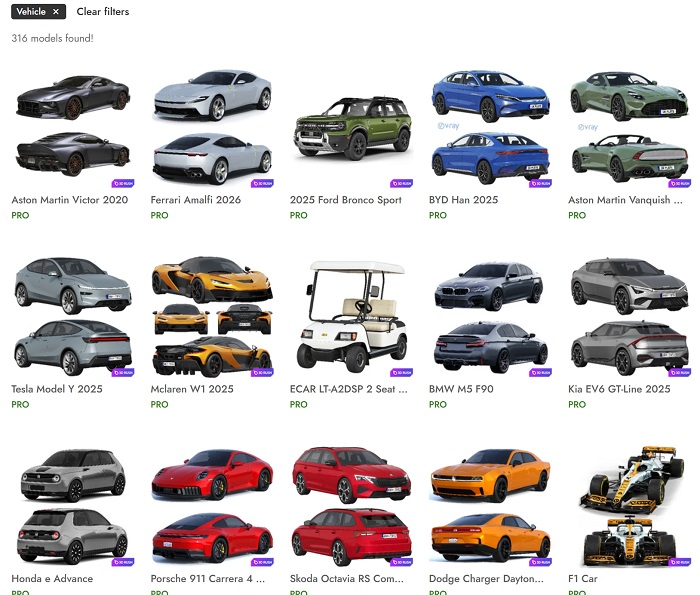
Creating a realistic urban environment for a video game, an architectural visualization presentation, or a cinematic visual effects shot is a monumental and highly technical task. While skyscrapers, sidewalks, and asphalt roads form the static skeleton of any digital city, it is the vehicles that truly breathe life, movement, and a sense of scale into the scene. For professionals looking to streamline this workflow, professional platforms like 3D Rush provide the essential building blocks needed to populate these environments. However, hard-surface modeling—especially automotive design—is widely recognized as one of the most complex, unforgiving, and time-consuming disciplines in the entire 3D computer graphics industry.
Achieving the perfect, flowing curvature of a vehicle’s body (often referred to as Class-A surfacing), maintaining pristine quad-based topology without any shading artifacts, and configuring photorealistic car paint materials requires years of specialized experience. If an artist attempts to model a highly detailed vehicle from scratch for a tight-deadline project, they will quickly realize how much it drains both their timeline and the overall budget. The reflections on a car’s glossy clear coat are entirely unforgiving; even the slightest millimeter of error in edge loops or vertex placement will result in warped, unrealistic reflections that immediately shatter the illusion of realism. This is exactly why top-tier visualization studios, game developers, and freelance artists almost exclusively rely on downloading professional, ready-made 3D car models. By utilizing premium automotive assets, artists can instantly populate driveways, parking lots, and bustling city streets with photorealistic vehicles that feature accurate real-world proportions, immaculate geometry, and pre-configured PBR (Physically Based Rendering) materials for the glass windows, rubber tires, and metallic paint.
However, a truly believable and immersive digital world consists of much more than just luxury sports cars and standard family sedans. A realistic cityscape, an industrial harbor, or a massive construction site requires a diverse and complex ecosystem of transportation. You need heavy delivery trucks, articulated city buses, massive construction machinery, and perhaps even trains or aircraft depending on the specific scope of your virtual environment. Sourcing highly specialized 3D transport models allows level designers and environment artists to build authentic, functional-looking worlds without spending weeks attempting to meticulously model the intricate hydraulic mechanics of an excavator or the detailed interior cabin of a subway car. These diverse transportation assets add crucial narrative context, industrial realism, and grand scale to any 3D environment.
While purchasing these intricate models is highly efficient for the production pipeline, the financial costs can quickly accumulate. Buying dozens of high-quality vehicles individually can easily break a mid-sized project’s budget. To solve this economic challenge, modern asset marketplaces like 3drush.com have developed a much smarter financial approach for their users. Instead of paying a high premium for every single asset, studios and solo artists can opt for cost-effective subscription plans. These subscription models grant users immediate, unhindered access to massive, curated libraries of premium 3D models for a flat, predictable recurring fee. This approach not only drastically reduces the average cost per downloaded asset but also grants artists the ultimate creative freedom to download, test, and swap various transport models within their scenes without ever worrying about individual price tags. It is the perfect combination of top-tier visual quality, production speed, and long-term financial efficiency.