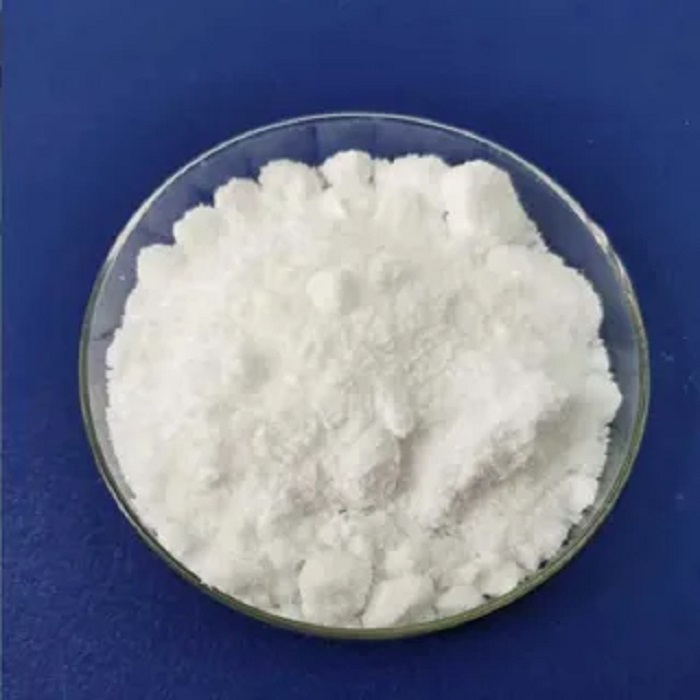
Yttrium fluoride (YF3) is an inorganic compound of the rare-earth element yttrium, which is of interest in materials science due to its high-temperature stability and chemical inertness. In industrial and scientific applications, it serves as a source of yttrium and fluoride ions and acts as a component that influences the optical and structural properties of complex materials.
Yttrium fluoride is used in the creation of optical and luminescent materials, as an additive for modifying glass and ceramics, and in technologies for producing specialized coatings and functional composites. Thanks to its stability and compatibility with various matrices, YF3 is employed in applications requiring controlled phase formation, enhanced transparency, a reduction in defects, and increased product durability.
Chemical formula YF3: general designation of the substance
Yttrium fluoride and yttrium oxide is represented by the chemical formula YF3, which indicates the qualitative and quantitative composition of the compound. The formula uses the symbols of chemical elements, with subscripts denoting the number of atoms of each element present in a single formula unit.
In the case of YF3, it is evident that the compound is composed of the element yttrium (symbol Y) and the element fluorine (symbol F). The absence of a subscript for Y indicates a single yttrium atom, while the subscript 3 for F indicates three fluorine atoms.
Breakdown of the composition of YF3 by element
The formula YF3 can be interpreted as: «one yttrium atom and three fluorine atoms.»
Thus, the stoichiometric ratio of the elements in the compound is Y:F = 1:3, which reflects a stable proportion characteristic of this particular fluoride.
The breakdown by element involves two key points:
- Y (yttrium) – one atom per formula unit; it constitutes the «cationic» part of the compound.
- F (fluorine) – three atoms per formula unit; these form the «anionic» part and provide the required ratio with yttrium.
When interpreting the formula, it is important to remember that it reflects the composition in terms of individual atoms, rather than necessarily implying that the substance exists as discrete molecules. Therefore, YF3 should primarily be understood as a representation of the composition and the specific ratio of yttrium to fluorine established within this compound.