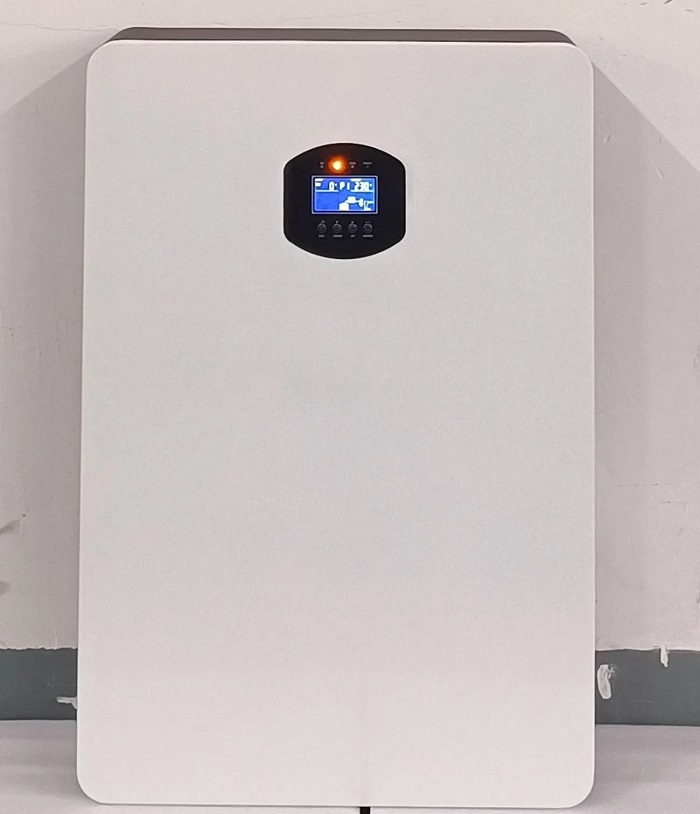
A 5 kW inverter is a common choice for a Nigerian home, but the battery behind it decides what the system can actually do. Two installations with the same inverter can behave very differently if one has a small pack that trips on a pump start and the other has a pack with enough capacity and current. The battery is not an accessory. It is half of the system.
Start with nominal voltage. Most 5 kW hybrid inverters in this class run on a 48 V battery bank, which in lithium terms usually means a 51.2 V pack. A 12 V or 24 V battery is not suitable for this power level unless the inverter is specifically designed for it. Check the inverter’s battery voltage range and the battery’s charge voltage before assuming compatibility. A mismatch may appear to work and then cause communication or protection problems.
Usable energy matters more than the label. A 5.12 kWh pack is not the same as 5 kWh of usable energy, because the battery will not normally be discharged to zero. The manufacturer publishes a depth of discharge and a round-trip efficiency, and both reduce the figure. If a household needs 5 kWh overnight, the pack has to be larger than 5 kWh. Plan on the usable number, not the marketing headline.
Current ratings decide whether the inverter can deliver its full output. A 5 kW inverter at 48 V draws roughly 100 A from the battery before losses. A small pack with a low current limit will either derate the inverter or trip when a pump or air conditioner starts. Check the battery’s continuous and peak discharge ratings together with the inverter’s surge demand. This is where a larger pack earns its keep, even if the energy figure looks generous on paper.
Cycle life and warranty terms decide the long-term cost. A lithium iron phosphate pack is usually rated for several thousand cycles to a stated end-of-life capacity, but the warranty conditions matter: temperature limits, maximum charge current, and whether the battery must be installed by an approved technician. Read the warranty document, not just the datasheet. A pack that is cycled hard in a hot room may not reach the advertised life.
Physical fit is the last check, and it is easy to get wrong. Batteries are heavy, and a 14 kWh pack may need two people and a clear route to the installation position. Check the dimensions, the clearance for ventilation and the floor loading. If the battery is wall-mounted, confirm that the wall can carry the weight. If it is rack-mounted, leave space for the next module. Retrofitting a second pack into a cramped cabinet is a common frustration.
A 14.3 kWh LFP home battery is a useful reference point for a family that wants several hours of evening backup with a 5 kW inverter, because the capacity covers refrigeration, lights, entertainment and a modest pump without pushing the pack to its limit every night. The exact capacity should still come from the household’s night energy and the desired depth of discharge, not from the model name.
Chemistry matters for the climate. Lithium iron phosphate is more tolerant of heat and is less prone to thermal runaway than older chemistries, which is why it dominates the home storage market. That does not make it immune to heat. Keep the battery out of direct sun, provide ventilation, and avoid installing it next to a generator or a welding area. The datasheet temperature range is an operating limit, not a target.
Communication is worth checking before purchase. Many inverters and batteries exchange data over CAN or RS485 so the inverter knows the state of charge and the charge limits. If the two devices cannot talk, the system may still run, but it will rely on voltage-based estimates that are less accurate. Ask the supplier to confirm compatibility with your inverter model, not just the voltage.
The last check is the plan for expansion. A household that expects to add an air conditioner or a second fridge should choose a battery that can be paralleled, and an inverter that supports the additional capacity. Buying a pack that is already at its limit leaves no room to grow. Buying one with a defined expansion path turns a first purchase into a platform, which is usually the better long-term decision.